The best LED aquarium light for plants is one that fits your tank, gives you useful brightness control, and suits the plants you want to grow. Compare the five options below by fit, controls and trade-offs.
This is an editorial comparison, not a controlled NanoFishNest test. Product specifications vary by model and region; no original PAR measurements are presented.
Specifications reviewed: 30 September 2026. The comparisons below use published product information and manuals. Prices and included accessories vary by country and fixture size; follow the product links for the version sold in your market.
Quick Comparison: Best Lights for Planted Aquariums
| Light | Choose it for | Main trade-off |
|---|---|---|
| Fluval Plant 4.0 / 3.0 | App control, dimming and scheduled lighting | Premium controls; confirm fitting range and power-failure behavior. |
| Chihiros WRGB II Pro | An aquascape where adjustable output and color channels matter | Match the mounting hardware, glass thickness and carbon supply. |
| Twinstar S-Line V / E series | A planted display with a clearly specified fixture and controller | Generations differ; the S-Line V specifications below do not describe older S/E lights. |
| NICREW RGB+W 24/7 | Budget-conscious buyers who prefer remote controls | Inline controller plus wireless IR remote; no smartphone control documented in the linked manual. |
| Current USA SereneSun RGB+W | Remote-controlled lighting for low-to-medium-light plants | Verify the exact SereneSun kit; do not substitute Satellite or SereneSun Pro specifications. |
Small aquarium? Go straight to the nano planted-tank recommendations before choosing a full-length light bar.
On this page: Choose your light · Product comparisons · Nano tanks · Fit and coverage · PAR and PPFD · Lighting schedule · FAQ
Choose Your Light in Five Steps
1. Measure the aquarium. Write down length, front-to-back width, water depth and rim or glass thickness. Check space for a lid and the light’s mounting hardware. A fixture whose brackets reach both ends may still have a much shorter illuminated body.
2. Start with your plants. For Anubias, Java fern and many Cryptocoryne, prioritize even coverage and dimming. For a demanding carpet or intensive stem-plant layout, look for credible output information at a comparable depth. Species and growing conditions matter more than a “high-tech” label.
3. Decide how you want to control it. Choose Fluval for app scheduling, compare Chihiros or the specific Twinstar controller for display adjustments, and consider NICREW or SereneSun if you prefer physical controls. Check whether the timer can provide your intended daily light period.
4. Check the limitations. Confirm lid clearance, coverage, required accessories and what happens after power is interrupted. A schedule retained in memory and a clock that keeps the correct time are different features.
5. Compare the total price. Compare fixtures that fit the same tank. Include any dimmer, controller, riser or suspension kit you need. For easy plants, paying for a more powerful fixture may add little unless its controls or fitting solve a specific problem.
The Five Planted Aquarium Lighting Options Compared
1. Fluval Plant 4.0 / 3.0: Best for App Control
Choose it if: You want programmable lighting without buying a separate controller. Compare the current Fluval Plant 4.0 with a discounted Plant 3.0 in the size that fits your aquarium.
Check the current price of the Fluval Plant 4.0 on Amazon.
| Generation | Published fitting ranges | Controls |
|---|---|---|
| Plant 4.0 | 22W: 15–24 in; 32W: 23–35 in; 46W: 35–49 in; 59W: 46.25–61 in | FluvalConnect; color and intensity adjustment; scheduled 24-hour cycle. |
| Plant 3.0 | 22W: 15–24 in; 32W: 24–34 in; 46W: 36–46 in; 59W: 48–60 in | FluvalSmart; FluvalConnect also supports older Bluetooth lights through its first-generation option. |
Useful detail: Fluval’s Plant 4.0 FAQ says that after a power failure in Auto or Pro mode, the schedule resumes from midnight until a mobile device resynchronizes the clock. Check this before relying on automatic timing while away.
Main limitation: App control does not establish a plant-growth advantage over a less expensive light. Compare coverage and output for the exact model. If your existing 3.0 already fits and grows your plants well, a generation change alone is not a reason to replace it.
Before ordering: Check Plant 4.0 specifications or Plant 3.0 specifications for your region. For a compact cube, see the separate Plant 4.0 Nano option.
2. Chihiros WRGB II Pro: For Adjustable Aquascaping Light
Choose it if: You want adjustable color channels and output for an aquascape, and are prepared to match intensity to your plants, nutrients and available carbon.
Representative model: The WRGB II Pro 60 is listed at 74W, with a 600 × 140 × 18 mm body, a 60–80 cm aquarium fitting range and a maximum glass thickness of 10 mm. The European lineup runs from 37W for Pro 30 to 138W for Pro 120. Check the model specifications rather than treating every Pro fixture as interchangeable.
Main limitation: The published guidance warns against operation under sealed lids because of water vapor and corrosion. Mounting fit and ventilation deserve attention before purchase. The standard bracket arrangement may need different hardware for your aquarium.
Warranty check: Ask the seller which regional warranty and return process apply. Chihiros publishes warranty exclusions covering misuse and water damage outside designed operating conditions; that is more useful than assuming all moisture-related failures receive the same response.
Before ordering: Compare Chihiros WRGB II Pro models and mounting options at Glass Aqua. Choose the fixture and any stand or hanging kit together. This guide does not provide a controlled output comparison against Fluval or Twinstar.
3. Twinstar S-Line V / E Series: For a Planted Display
Choose it if: You want a display-oriented planted-tank fixture and can identify the exact series, generation and included controller. “Twinstar S/E” describes several different products, not one specification.
Representative model: Twinstar Europe lists the S-Line V 600S at 67W, with a 57 × 12 × 11.7 cm product size and support for aquariums up to 70 cm. Its S-Line V lineup ranges from 17W to 125W. LightControl Pro is included; the pendant kit is sold separately. View the S-Line V lineup and controls.
Main limitation: Older S models and E-series fixtures can have different output, mounting and dimming arrangements. Compare the whole package, including any controller or suspension accessories, instead of borrowing specifications from another generation.
Color versus growth: A spectrum you prefer can make a display look better, but this article does not establish that Twinstar produces redder plants or better growth than the other options. Plant species and growing conditions still matter.
Before ordering: Confirm the exact model name, fitting range and accessories with the dealer. Use the current European S-Line V details as a reference only when that is the version you are buying.
4. NICREW RGB+W 24/7: Budget Option with Physical Controls
Choose it if: You prefer an inline controller and wireless infrared remote to a phone app. For an easy planted setup, compare the correctly sized fixture with other budget lights rather than buying on wattage alone.
Verified controller features: The official RGB+W 24/7 manual describes five programmable lighting phases, adjustable white/red/green/blue channels and optional 15- or 30-minute ramps. It also allows four saved color combinations. These are color memories, not four independently saved daily schedules.
Main limitation: Infrared control needs a direct line of sight to the receiver. Confirm the fixture’s size, included controller and mounting range in the product listing. Do not assume features from NICREW C10, ClassicLED or another model apply to RGB+W 24/7.
Starting approach: Use a modest intensity and roughly six hours daily for a newly planted aquarium, then adjust to observed growth. A fixed percentage cannot describe the light reaching plants in tanks of different depth and width.
Before ordering: Match the listing to NICREW’s RGB+W manual and check the live price for your required length. The manual specifies a 12-month limited warranty. No lifespan prediction or measured carpeting-plant performance is established here.
For another budget light-bar option, compare the Hygger planted aquarium light in the appropriate length. Check its own mounting and timer instructions; NICREW’s controller features do not describe the Hygger fixture.
5. Current USA SereneSun RGB+W: Remote-Control Alternative
Choose it if: You want a remote-controlled SereneSun kit for low-to-medium-light plants. The manufacturer’s product page describes that level of plant use. Check the model carefully: SereneSun, SereneSun Pro and Satellite are different ranges.
Representative fixture: The 18–24 in SereneSun listing specifies a 19W RGB+W fixture, an aluminum body approximately 16.8 × 3.5 × 0.44 in, adjustable docking mounts and a wireless controller. The specifications table lists white for the smallest version and black for larger versions; finish is not consistent across the range.
Main limitation: The included controller’s Timer B mode adds sunrise, sunset and moonlight around the daylight period. Review the complete schedule before use rather than assuming that the daylight setting equals the total illuminated time. Check the linked instructions for the kit you buy.
For demanding plants: Do not infer high-light or carpeting performance from RGB branding. Compare reliable measurements at the intended depth, or select a fixture whose performance and coverage for that application are documented.
Before ordering: Compare the SereneSun models and confirm controller, fitting range, finish and regional warranty. The supplied-product documentation takes priority over specifications for a similarly named light.
Best Light for Nano Planted Tanks (2–10 Gallons)
For a nano planted tank, start with length, depth and mounting clearance. A compact cube and a shallow long aquarium can hold the same volume but need different coverage.
For app control: The Fluval Plant 4.0 Nano, 20W offers adjustable positioning, color channels and a programmable cycle through FluvalConnect. Check bracket fit and lid clearance; a compact light may leave the ends of a long tank shaded.
For a budget alternative: The Hygger Mini Pro plant light is marketed for 2–10 gallon tanks. Hygger specifies a 0.2–1.0 in wall clamp and 6/8/10-hour timer settings. Measure the rim, not just the glass, before deciding it will fit.
For low-tech plants: Anubias, Java fern and many Cryptocoryne are sensible starting choices. Favor adjustable brightness and coverage over maximum output. If you are also planning the tank around fish, use our nano fish and planted-tank setup guide alongside the lighting checks.
Worked Example: Same Volume, Different Lighting Fit
These are illustrative dimensions, not NanoFishNest test tanks. A 30 × 30 × 30 cm cube and a 60 × 30 × 15 cm shallow aquarium both have a nominal volume of 27 liters, about 7.1 US gallons, before substrate and the gap above the water. A “7-gallon light” label does not tell you which shape it covers.
| Illustrative aquarium | What to check | Likely fitting direction |
|---|---|---|
| 30 cm cube | Coverage across the 30 × 30 cm footprint and light reaching lower leaves. | Compare a compact adjustable fixture; check clamp and lid clearance. |
| 60 cm shallow long tank | Coverage along the full 60 cm length, including plants near both ends. | Compare a suitable light bar or another arrangement with documented spread. |
For the long aquarium, dimming can be more useful than simply buying a higher-output unit: the water is shallow, while the distance between the plants at either end is twice that of the cube. Check dimensions and spread before comparing watts.
Check Tank Fit, Lids and Coverage Before You Buy
Bracket reach is not illuminated length. For example, Fluval lists its Plant 4.0 22W body at 15 in long while its supports fit a 15–24 in aquarium. That tells you it can mount across the tank; it does not establish equal brightness at every planting position.
Measure down to the plants. Water depth, mounting height, plant placement and obstructions affect the readings that matter. A shallow foreground carpet and a tall background stem can receive different intensities under the same fixture.
Check the lid and planting layout. Lid material, deposits, floating plants and tall stems can change how much light reaches lower leaves. Before increasing output, clean the relevant surfaces and check for shading. Aquarium Co-Op’s lighting guide explains intensity, lid interference and spread.
Consider width as well as length. On a wide aquarium, a narrow bar may not illuminate front and back evenly. Raising a fixture can alter spread and intensity; two lamps or a different fixture may be worth comparing. Neither more wattage nor longer bracket reach resolves every coverage problem.
Controls, Replacement Parts and Ownership Cost
Before choosing between similarly priced lights, check these details in the manufacturer’s manual or with the seller:
Power failure: Will the saved settings survive, and will the clock remain correct? For Plant 4.0, review the resynchronization limitation noted above. For the other fixtures, ask about the exact controller instead of assuming its memory retains time.
Replacement parts: Can you obtain the correct adapter, remote, controller and brackets separately? Record the model and required electrical specifications before ordering a replacement. Availability varies by market and is worth checking before the initial purchase.
Included accessories: Check whether dimming, app control and mounting are supplied or require extras. Twinstar S-Line V includes LightControl Pro but lists its pendant kit separately; other generations may differ.
Warranty and returns: Confirm the local seller, coverage terms and return destination. A published LED-hour rating is not a promise that the entire fixture, adapter and controller will last that long.
Understanding PAR and PPFD
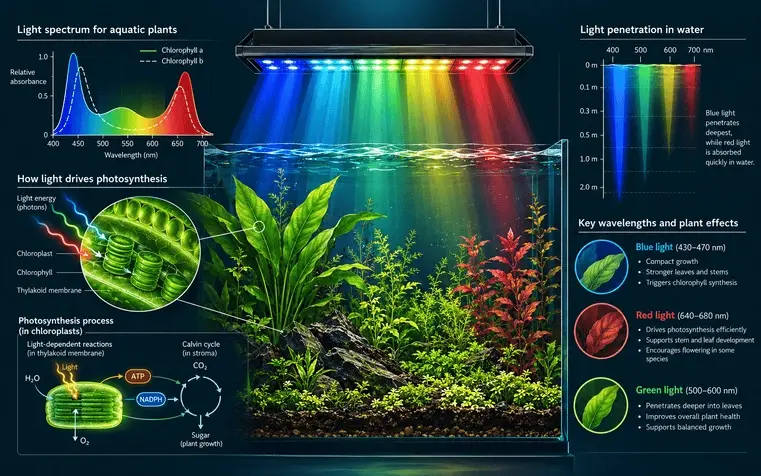
PAR describes the light range traditionally used to assess photosynthesis, approximately 400–700 nm. PPFD measures how many photons in that range reach a surface each second, expressed in µmol/m²/s. When aquarium hobbyists discuss a “PAR reading,” they usually mean PPFD.
Compare readings taken at similar mounting height, depth, position and settings. A single center reading cannot show how evenly a fixture covers the tank. Manufacturer figures and independent tests should remain separately labeled unless their methods are comparable.
There is no universal PPFD threshold that guarantees healthy growth or makes injected CO₂ compulsory. Plant requirements, carbon availability, nutrients and total daily light exposure all influence the result. Lumens describe brightness weighted to human vision; watts describe electrical power, not light arriving at the leaves.
What Color Light Is Best for Aquarium Plants?
Many aquarium plants grow under a range of white-light spectra when usable intensity and coverage suit them. RGB or WRGB channels can change how fish and plants appear; their presence alone does not establish better growth. Aquarium Co-Op discusses spectrum and intensity as separate considerations.
Color temperature describes the visual warmth or coolness of white light. Choose an appearance you enjoy, then assess coverage, dimming and plant needs. Avoid promises that a particular red channel will automatically turn a plant red or that blue light alone explains an algae outbreak.
How Many Hours of Light Does a Planted Aquarium Need?
For a new planted aquarium, roughly six hours daily is a practical starting point. Many setups start within a 6–8-hour range. Established tanks may use longer schedules when intensity, plants, carbon and nutrients support them. Eight hours is not a universal photosynthesis cutoff.
Use a timer, make one adjustment at a time and allow plants to respond before changing another setting. Aquarium Co-Op’s balancing guide recommends waiting about two weeks between adjustments in a low-tech aquarium. Fluval’s FAQ describes 8–10 hours as a typical photoperiod, with different species having different requirements.
Count the complete schedule. Sunrise, daylight, sunset and moonlight contribute different amounts of light. A 24/7 controller describes a daily cycle, not a reason to keep the aquarium brightly lit throughout the night. Program a dark period and review any factory settings.
Adjust Lighting When Algae Appears
Review excessive intensity or duration alongside plant growth, carbon supply, nutrients and maintenance. Start conservatively, observe new growth and adjust gradually; a fixed brightness percentage cannot suit every fixture and tank.
If plants below the surface are struggling, check lid deposits, shade and coverage before extending the day. If algae develops after an output increase, returning to the previous setting may help while you assess other causes. Avoid changing duration, brightness and fertilization at the same time if you want to identify what helped.
For an aquarium used for spawning or fry rearing, lighting is one part of the setup. See our nano fish breeding-tank setup guide for the wider planting and care considerations.
Which Light Should You Buy?
Start with the option that solves your actual constraint: Fluval for app scheduling, NICREW for a physical controller on a budget, Chihiros or a specified Twinstar model for an adjustable planted display, and SereneSun for its documented low-to-medium-light use. For a compact aquarium, begin with the nano section.
Before ordering, confirm the exact model, tank fit, accessories and controller behavior. A dependable light that covers your plants and can be adjusted to the aquarium is a better purchase than extra output you cannot use.
For the broader setup, continue with the nano fish guide. If you are comparing mounts and fixture lengths, browse Glass Aqua’s aquarium equipment and verify each product’s specifications before purchase.
Frequently Asked Questions
What is the best light for aquarium plant growth?
Choose a light that covers your aquarium, fits its mounting arrangement and offers brightness control suited to your plants. Fluval Plant 4.0 or 3.0 is worth comparing for app scheduling; NICREW RGB+W 24/7 is an option with physical controls. This comparison does not establish a measured growth winner.
What color light is best for aquarium plants?
Many aquarium plants grow under a range of white-light spectra when intensity and coverage are appropriate. RGB and WRGB channels let you adjust the appearance of plants and fish, but the branding alone does not establish better growth. Consider usable light at the leaves, plant requirements and dimming before choosing on color temperature.
How many hours of light does a planted aquarium need?
Start a newly planted aquarium at roughly six hours daily; 6–8 hours is a practical starting range for many setups. Established aquariums may use longer schedules depending on intensity, plants, carbon and nutrients. Plants do not universally stop photosynthesizing after eight hours. Use a timer and adjust one setting at a time.
Can too much light encourage aquarium algae?
Excessive intensity or duration can contribute to algae problems, but light is not the only factor. Review plant health, carbon availability, nutrients and maintenance. Reduce excessive lighting gradually and observe the response instead of assuming every outbreak requires CO₂ injection.
What is the difference between PAR and lumens?
PAR describes the light range traditionally associated with photosynthesis, approximately 400–700 nm. PPFD measures photons in that range reaching a surface each second, in µmol/m²/s. Lumens describe brightness weighted to human eyesight. Compare PPFD readings at similar depth, position, mounting height and settings, together with coverage.
Do I need injected CO₂ with a high-output light?
A powerful fixture does not automatically require injected CO₂. Many easy aquarium plants grow without it when intensity is adjusted appropriately. Demanding plants under intense lighting may benefit from injected CO₂, but match the light to the plants, available carbon and nutrient supply rather than choosing by wattage alone.
Will a light that fits the tank illuminate all of it evenly?
Not necessarily. Extendable brackets can reach farther than the illuminated body, and coverage also depends on width, mounting height, depth and shading. Measure the aquarium and check fixture dimensions and documented spread, especially for wide tanks or long shallow nano tanks.
Does a 24/7 aquarium light stay on all night?
A 24/7 controller usually describes a programmable daily cycle, not continuous bright lighting. Review the daylight, ramping and moonlight periods for the exact controller and program a dark period. Also check whether its clock needs resetting after a power interruption.