The best fish for a 5 gallon tank are a single betta, a trio of least killifish, or 3 to 4 male Endler’s livebearers. Many keepers rate a planted cherry shrimp colony, with no fish at all, above any of them.
A 5 gallon tank (18.9 litres) holds about 8 cm (3 in) of adult fish. The “one inch per gallon” rule still quoted in shops would allow 5 inches. That budget covers one fish or one small group of a single species. A mixed community needs a bigger tank.
The RSPCA advises a tank of at least 45 × 30 × 30 cm (about 40 litres), a footprint no 5 gallon tank has. These five plans fit inside the smaller budget.
| Stocking plan | Animals | How many | Heater | Difficulty |
|---|---|---|---|---|
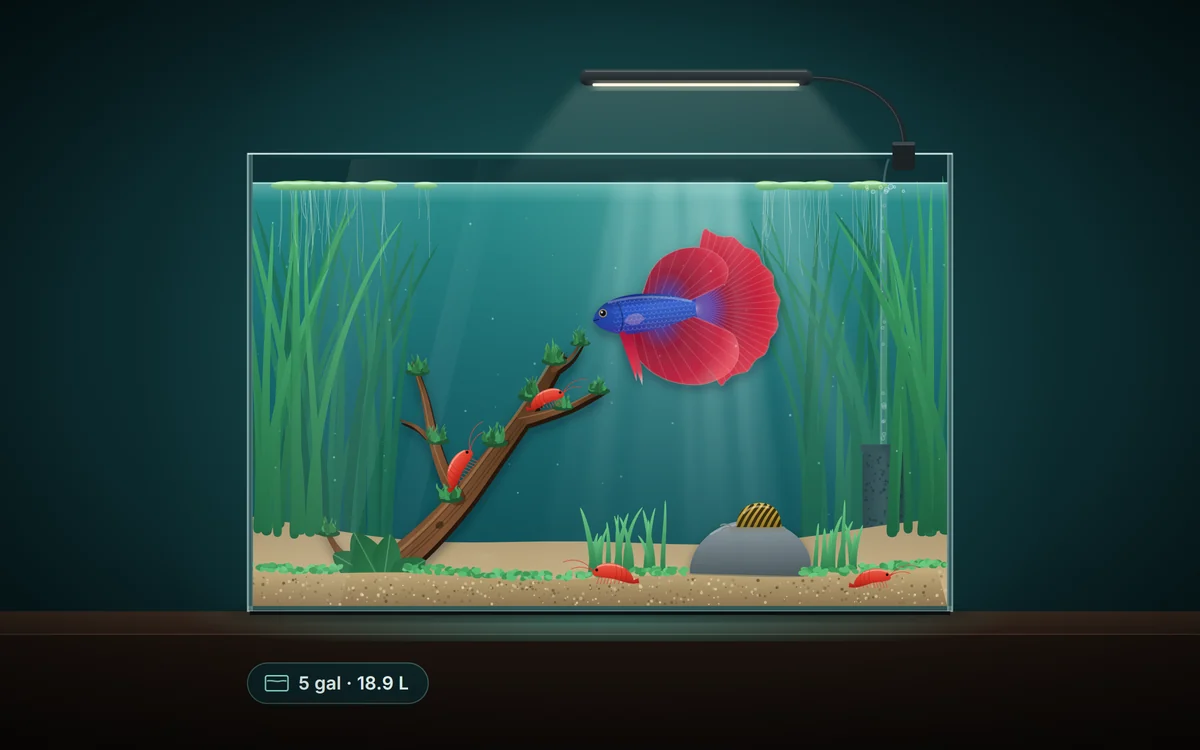
| Betta solo | Betta, plus a nerite or ramshorn snails | 1 betta | Yes, 24 to 26°C | Easy |
| Bachelor group | Male Endler’s livebearers | 3 to 4 males | Yes | Easy |
| Killifish trio | Least killifish | 1 male, 2 females | Usually not | Easy |
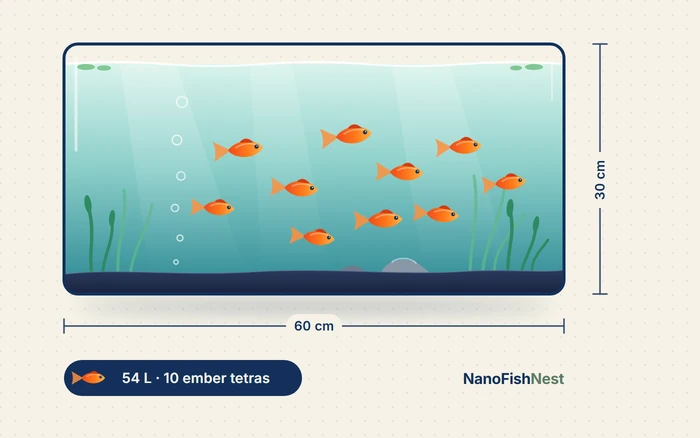
| Shrimp colony | Cherry shrimp and snails | Start with 10 | Usually not | Easy in a mature tank |
| Micro-hunter | Scarlet badis | 1 male, 0 to 2 females | Often not | Intermediate |
How these picks were chosen
Counts follow the RSPCA guide of 1.5 to 2 litres per centimetre of fish, Seriously Fish species profiles, two 2024 betta studies, and about 250 keeper reports.
How many fish fit in a 5 gallon tank
Short answer
About 8 cm (3 in) of adult fish in total. That is one betta, 3 to 4 male Endler’s livebearers, a least killifish trio, or one male scarlet badis with 1 to 2 females. Choose one plan per tank.
The RSPCA recommends 1.5 to 2 litres of water per centimetre of fish, tails excluded. The stock calculator uses the stricter figure.
| Step | Value |
|---|---|
| Nominal volume | 18.9 litres |
| Minus 15% for substrate and decor | 16.1 litres |
| Divided by 2 litres per cm of adult fish | About 8 cm of fish |
“One inch per gallon” would allow 12.7 cm (5 in). It counts a 6 cm betta the same as six 1 cm fish and ignores school size and swimming length. A bigger filter clears more waste, but it adds no swimming room or territory.
Five imperial gallons is 22.7 litres, and a UK “20 litre” tank holds about 5.3 American gallons.
Check the footprint before the fish
Fish need floor area and swimming length, and 5 gallon tanks differ widely in both.
| Tank | Dimensions | Best use |
|---|---|---|
| Aqueon Standard 5.5 gal | 16.5 × 8.75 × 10.75 in | Any pick, including a small group |
| Fluval Spec 5 | 49.5 × 16.5 × 29 cm | The longest common 5 gallon. The filter chamber takes swimming space |
| Marineland Portrait 5 gal | Tall and narrow. Owners report “closer to 4” gallons of water | Betta, shrimp, or snails |
| RSPCA minimum for fish | 45 × 30 × 30 cm | No 5 gallon tank meets it |
Tall and cube tanks suit a betta, shrimp, snails, or one sparkling gourami. A small group needs a tank at least 40 cm long.
The 9 best fish and invertebrates for a 5 gallon tank
Sizes are standard length (SL), measured from snout to tail base.
| Fish | How many | Adult size (SL) | Water | Heater |
|---|---|---|---|---|
| Betta | 1 male or 1 female | Up to 7 cm | 24 to 26°C, pH 6.0 to 8.0 | Required |
| Least killifish | 1 male, 2 females | About 20 mm | 20 to 26°C, pH 7.0 to 8.0, hard | Usually not |
| Endler’s livebearer | 3 to 4 males | Males about 15 mm | 24 to 30°C, pH 7.0 to 8.5 | Required |
| Scarlet badis | 1 male, alone or with 1 to 2 females | About 20 mm | 18 to 26°C, pH 6.5 to 8.5 | Often not needed |
| Sparkling gourami | 1, or a male and a female | 40 mm | 22 to 28°C, pH 5.0 to 7.5 | Required |
| Pea puffer | 1, with no tankmates | 25 mm | 22 to 28°C | Required |
1. Betta (Betta splendens)
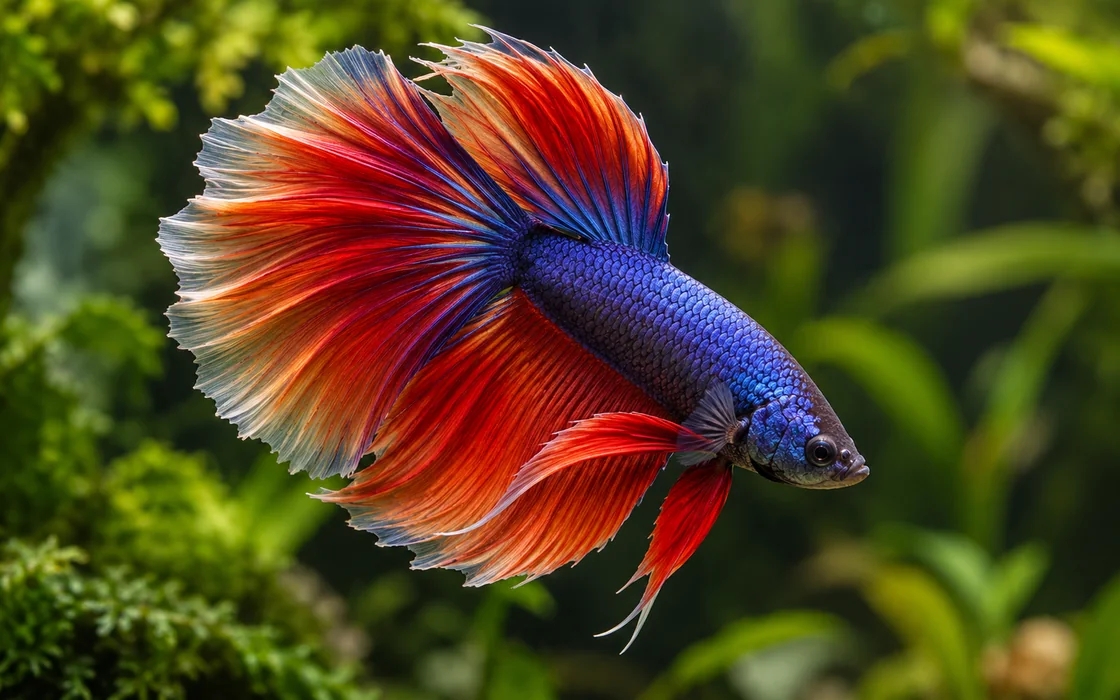
Keep one male or one female. The betta has the strongest evidence of any 5 gallon fish. In a 2024 study, 13 males were most active and showed the fewest abnormal behaviours in a planted 19.3 litre tank, about 5 gallons. A second study found similar swimming rates in 10, 38, and 208 litre tanks, and more swimming once plants and gravel were added. Two males never share a tank. Given the choice, bettas pick live plants over plastic ones.
2. Least killifish (Heterandria formosa)
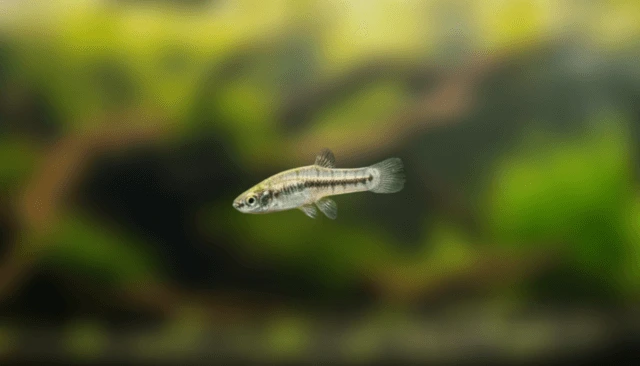
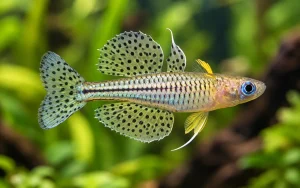
Keep one male with two females. This is one of the smallest fish species in the world, and a livebearer despite the name. Seriously Fish sets 12.5 litres for a pair, one of the few profiles below 5 gallons. Females drop 2 or 3 fry a day for about 10 days, so the colony grows slowly and the surplus needs a home. The species survives 10 to 32°C and suits hard tap water.
3. Endler’s livebearer, males only (Poecilia wingei)
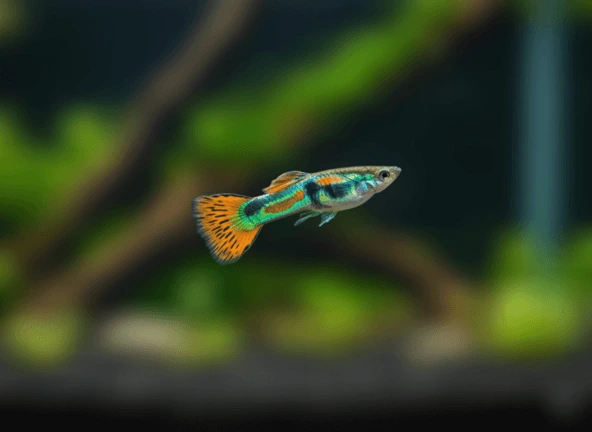
Keep 3 to 4 males and no females. Males give colour and movement for little waste. The species is “incredibly prolific” and broods every 23 to 24 days, so one female turns a 5 gallon into a nursery. Endler’s also cross with guppies, and the wild species is listed as Endangered (IUCN, 2021), so ask for pure, captive-bred stock.
4. Scarlet badis (Dario dario)
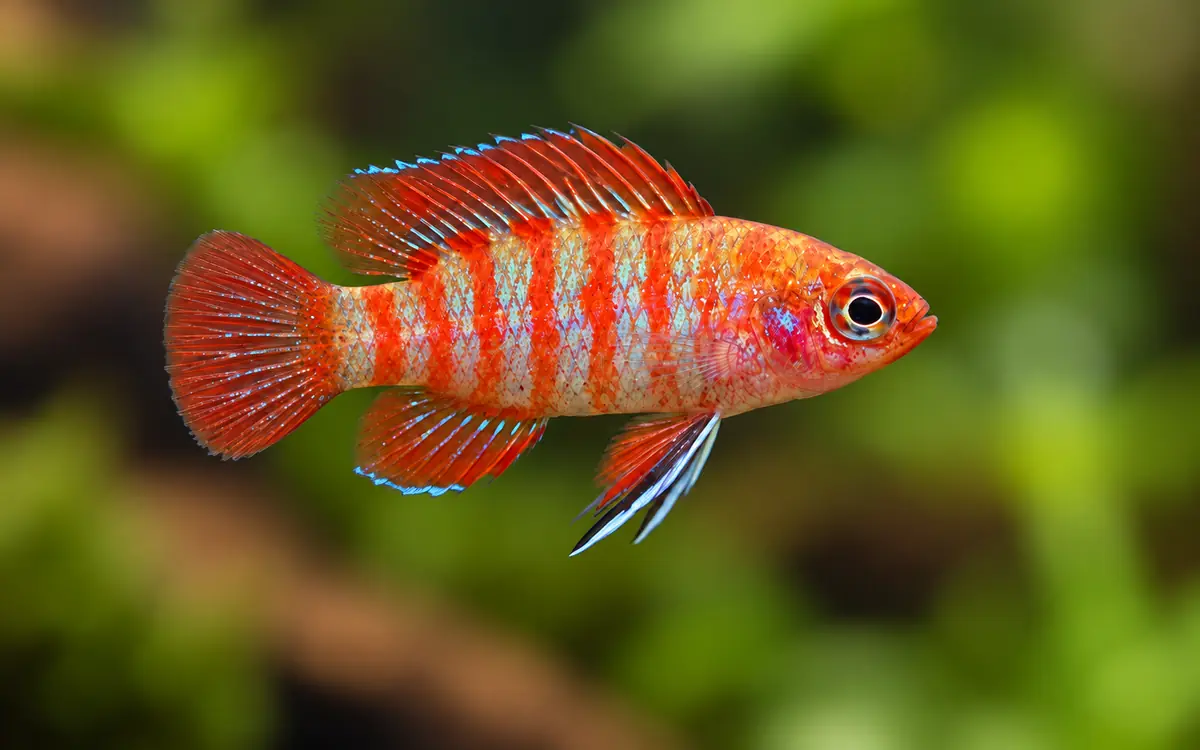
Keep one male, alone or with 1 to 2 females, since rival males fight. The badis is a slow micro-predator that patrols the whole tank as one territory. It does not reliably eat flakes or pellets, so feed baby brine shrimp, daphnia, or microworms. Adult shrimp may survive alongside it, but shrimplets are prey. Full care is in the scarlet badis guide.
5. Sparkling gourami (Trichopsis pumila)
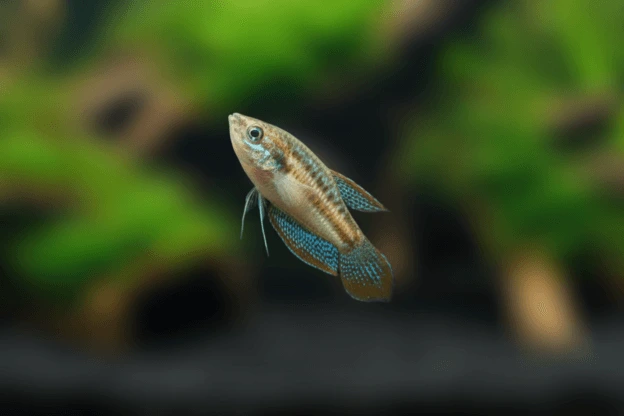
Keep one, or a male and a female. This calm labyrinth fish breathes air at the surface and croaks audibly. Two males fight in a small tank, and bigger or faster tankmates outcompete it. Adults usually ignore adult shrimp.
6. Pea puffer (Carinotetraodon travancoricus), contested
Keep one, with no tankmates. Sources disagree on how much space it needs. Seriously Fish allows one puffer in 12.6 litres, and Aquarium Co-op sets 5 gallons for the first. Practical Fishkeeping sets 45 litres as the minimum, and current puffer keepers favour groups in 10 to 20 gallons. Every source describes the same feeding work. Dried foods are “not usually accepted”, snails must be supplied, and any shrimp becomes food. Wild stocks are listed as Vulnerable, so buy captive-bred.
7. Cherry shrimp (Neocaridina davidi)
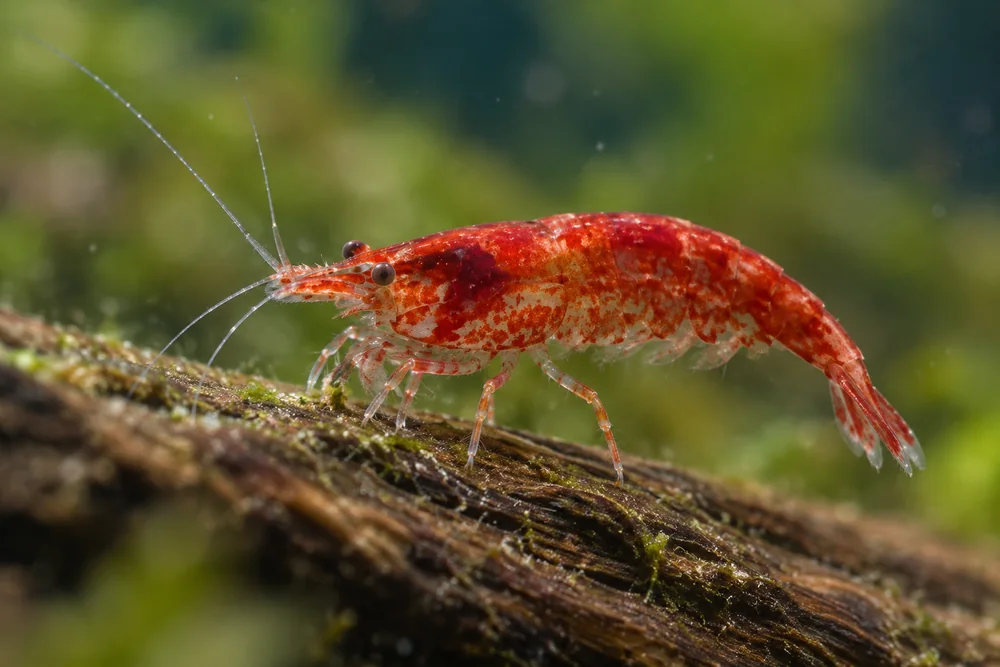
Start with 10 in a mature tank. One keeper who first wanted fish wrote that “shrimp were the far better choice.” Adults reach 3 to 4 cm, and young hatch as tiny adults, so the colony grows with the food supply. Room temperature suits them, so a heater is usually unnecessary. A 2015 study found 28°C optimal, and females lost their eggs at 32°C. Never release them into the wild.
8. Amano shrimp (Caridina multidentata)
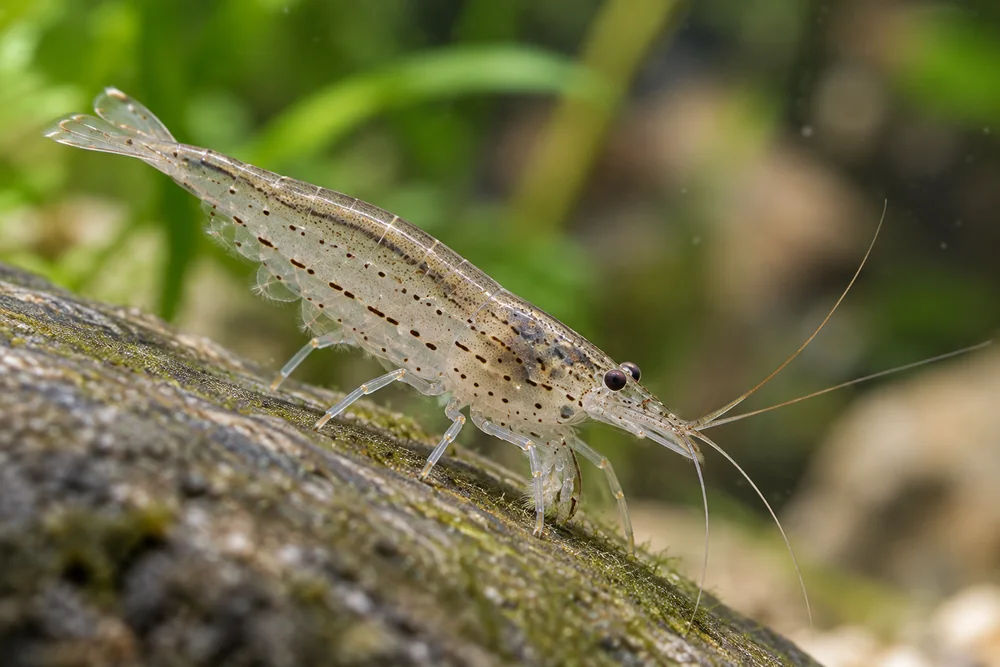
Keep 1 to 3. Amanos reach 4 to 5 cm and need tropical temperatures. They eat hair and thread algae but do little against flat algae on glass. Larvae need salt water, so numbers never climb. Their size makes them the shrimp a betta is least likely to kill.
9. Snails: nerite, ramshorn, and bladder
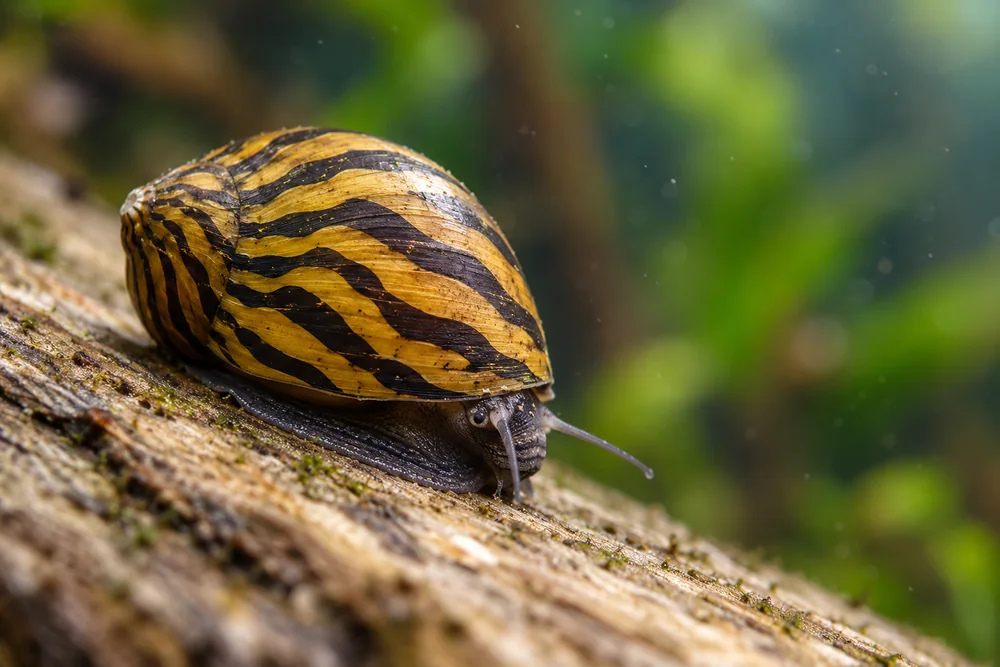
Keep one nerite, or a self-regulating group of ramshorn or bladder snails. Nerites reach 1.3 to 3.8 cm, and their eggs need brackish water to hatch, though the hard white egg capsules still appear on wood and stone. In a new tank with little algae, a nerite can starve. Ramshorn and bladder snails breed to match the food supply. Malaysian trumpet snails burrow at night but are invasive outdoors, so never release them.
Borderline picks: chili rasbora, ember tetra, clown killifish
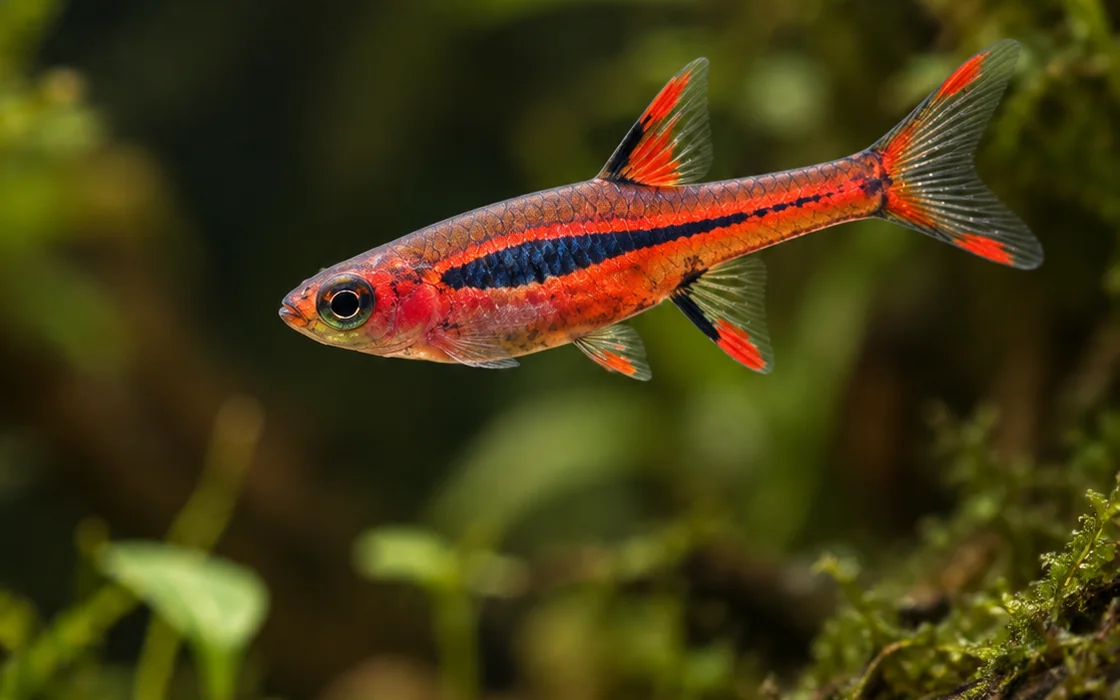
Chili rasbora (Boraras brigittae) is often suggested for 5 gallons and often disputed. At about 2 cm it fits by size. Seriously Fish still asks for a group of 8 to 10 on a 45 × 30 cm base, and the chili rasbora care guide recommends at least 45 litres. Keepers who run them in 5 gallons use 6 to 8 in a long, planted, species-only tank. Ember tetras swim more in open water and fit worse. Clown killifish need a group and a long, covered tank.
8 stocking plans for a 5 gallon tank
Each plan assumes a cycled tank, live plants, a sponge filter, and a thermometer.
| Plan | Stock | Heater | Watch for |
|---|---|---|---|
| Betta solo | 1 betta, 1 nerite or ramshorns | Yes | A bare tank. Add plants and a cave |
| Betta with shrimp | 10 cherry or 2 to 3 Amano shrimp, betta a week later | Yes | Shrimp vanishing weeks later |
| Shrimp colony | 10 cherry shrimp, pest snails | Usually not | A slow start |
| Bachelor group | 3 to 4 male Endler’s | Yes | One stray female |
| Killifish trio | 1 male, 2 female least killifish | Usually not | Surplus fry |
| Micro-hunter | 1 male scarlet badis, 0 to 2 females | Often not | Live food supply |
| Solo puffer | 1 pea puffer, separate snail culture | Yes | Messy feeding |
| Unheated specialist | 1 male Everglades pygmy sunfish, 2 to 3 females | No | Live food, cool winter |
Tank mates for a betta in a 5 gallon
Short answer
No other fish. A nerite or ramshorn snail is the safest companion. Amano or adult ghost shrimp usually survive. Cherry shrimp are a gamble that depends on the individual betta.
Fish companions fail in 5 gallons. Keepers report bettas killing celestial pearl danios, and neon tetras tearing betta fins. Results with shrimp are mixed. One keeper tried cherry shrimp “3x with 3 different bettas”, and each betta ate them.
Five steps raise the odds for shrimp.
- Cycle the tank before any animal goes in.
- Add the shrimp first and let them settle for a week.
- Plant dense cover such as flame moss.
- Test the betta with a single shrimp before buying a group.
- Prefer a long-finned betta, since keepers report these catch fewer shrimp.
Without a betta, adult shrimp usually live alongside male Endler’s, least killifish, or a sparkling gourami. Shrimplets are at risk with any fish, and a pea puffer eats shrimp of any size.
Fish for a 5 gallon tank without a heater
A betta, Endler’s, a sparkling gourami, and a pea puffer need a heater. Four options tolerate room temperature. Least killifish live at 20 to 26°C in the aquarium and survive 10 to 32°C. Scarlet badis take 18 to 26°C. Cherry shrimp manage room temperature and breed best near 28°C. Everglades pygmy sunfish need 10 to 22°C, a cool winter rest, and live or frozen food.
Medaka are the classic unheated fish but remain contested for 5 gallons. Japanese container keepers allow about 1 litre per fish, as the medaka ricefish guide describes. Seriously Fish and Aquarium Co-op set a 45 × 30 cm base or 10 gallons.
Algae eaters and low-maintenance picks
Short answer
No algae-eating fish fits a 5 gallon. Snails and shrimp do the job.
Otocinclus need a group of 6 and starve in new tanks. Bristlenose plecos reach 12.5 cm, Siamese algae eaters 16 cm, and Chinese algae eaters 28 cm. In a 5 gallon, a nerite, 1 to 3 Amano shrimp, or a cherry shrimp colony handles algae. All of them need feeding when algae runs low. Glass algae still needs a scraper.
The lowest-maintenance setup is a planted shrimp colony. Among fish, a single betta needs the least work.
Fish to avoid in a 5 gallon tank
These fish are often sold as small fish. Each one fails a 5 gallon on adult size, school size, or breeding rate.
| If the plan was | Why it does not fit | Choose instead |
|---|---|---|
| Neon tetras | Schooling fish of 30 mm SL that need a 60 cm tank | A betta or male Endler’s |
| Guppies | Females reach 6 cm SL and breed constantly | 3 to 4 male Endler’s |
| Goldfish | Up to 48 cm. The RSPCA advises 60 litres per fish | Shrimp, or a 20 gallon coldwater tank |
| GloFish tetras, danios, barbs, or sharks | Zebra danios and tiger barbs need 80 to 90 cm tanks | A GloFish betta |
| Pygmy corydoras | A midwater shoal of 8 to 12 that needs 10 gallons | A least killifish trio |
| Celestial pearl danios | Need 20 or more to spread male aggression | Male Endler’s |
| Kuhli loaches | Reach 12 cm long | Snails for the substrate |
| Dwarf gourami | 88 mm SL. Dwarf gourami iridovirus has no treatment | A sparkling gourami |
| Honey gourami | 55 mm SL and needs a 60 cm tank | A sparkling gourami |
| Angelfish | 15 cm long and 20 cm tall | A betta |
| White cloud minnows, harlequin rasboras | Active schooling fish that need 60 cm tanks | A least killifish trio |
Gear for a 5 gallon tank
The hygger links in this section are affiliate links. NanoFishNest earns a small commission on purchases made through them, at no extra cost to the buyer.
Heater
A 25 W adjustable heater suits most rooms. Fluval rates its P25 for up to 25 litres, and EHEIM rates its 25 W model for 20 to 25 litres. Check the water with a separate thermometer. Small tanks are the riskiest to oversize, as the heater guide shows. In 2024 the UK rejected an unbranded 25 W and 50 W heater at the border as a serious fire risk. Avoid unbranded models, and plug the heater into a GFCI (RCD) outlet.
Filter
Kit filters often run too strong for bettas. The Fluval Spec 5 pump moves 210 to 300 litres per hour, 11 to 16 times the tank volume. A sponge filter gives gentle flow and a shrimp-safe intake. The hygger HG908 sponge filter comes as Single-S (0.5 to 5 gallons) and Single-M (5 to 15 gallons), and the sponge filter guide compares other models.
Air pump
An air pump is needed only to run the sponge filter. The hygger HG949 air pump draws 1 W, suits tanks up to 20 gallons, and ships with a check valve.
Light
The hygger Mini Clip On Light in 9 W covers 12 to 16 inch tanks and clamps onto framed or frameless glass. The planted tank light guide lists stronger lights for plants.
Myths checked
| Claim seen online | What the evidence shows |
|---|---|
| One inch of fish per gallon | It ignores body mass and school size. A 5 gallon holds about 8 cm of adult fish |
| Bettas live in puddles, so a bowl is fine | Wild bettas live in paddies, swamps, ditches, streams, and ponds. Unfiltered 2 litre tanks without plants averaged 1.00 mg/L ammonia nitrogen over 25 days |
| A small tank is easier for beginners | Small volumes change faster. Many first-tank losses in keeper reports follow an uncycled start |
| Every rasbora is too big for 5 gallons | Chili rasboras reach about 2 cm. Harlequin rasboras reach 45 mm |
Best fish for a 5 gallon tank: FAQ
How many fish can go in a 5 gallon tank?
About 8 cm (3 in) of adult fish. That is one betta, 3 to 4 male Endler’s, a least killifish trio, or one male scarlet badis with 1 to 2 females.
Can a betta live in a 5 gallon tank?
Yes, if the tank is heated and planted. In a 2024 study, bettas were most active and least stressed in a furnished 19.3 litre tank. Keep one betta per tank.
Is a 5 gallon tank good for beginners?
Yes, for one betta or a shrimp colony in a cycled, heated tank. Small tanks change faster when something goes wrong, so a 10 gallon suits a first community.
What is the easiest fish for a 5 gallon tank?
A single betta. Cherry shrimp are easier still once the tank is mature. Least killifish are the easiest small group if surplus fry have a home.
Can neon tetras or guppies live in a 5 gallon tank?
No. Neon tetras need a school of 8 to 10 and a 60 cm tank. Female guppies reach 6 cm and breed constantly. A group of 3 to 4 male Endler’s fits instead.
Does a 5 gallon tank need a heater or an air pump?
A heater, yes, for a betta, Endler’s, and most tropical picks. Use a 25 W adjustable model. An air pump is needed only to drive a sponge filter.
Can a 5 gallon tank be saltwater?
Yes, as an expert project with an auto top-off. Fish options are tiny gobies such as Eviota. Clownfish reach 11 cm and need 20 gallons or more.
Is a 5 gallon fish tank legal everywhere?
No. Austria bans keeping fish permanently in tanks under 54 litres, and Sweden advises at least 40 litres. Swiss law allows nano setups. The United States and the UK set no home tank size.
What can live in a 5 gallon tank besides fish?
Cherry shrimp, Amano shrimp, and snails. African dwarf frogs are also kept, but the CDC linked a Salmonella outbreak to them and advises against them for children under 5.
Verdict
Keep one plan per tank, such as a betta, a least killifish trio, male Endler’s, or a shrimp colony. When a shop suggests a fish for a 5 gallon, check its adult size against the 8 cm budget first. With more room, the options widen in fish for a 20 gallon aquarium, and the nano fish guide compares every nano species.
Sources
- RSPCA, Choosing an aquarium
- Clark-Shen et al. (2024), Animal Welfare 33:e62
- Oldfield and Murphy (2024), Animal Welfare 33:e1
- Bender et al. (2025), J Appl Anim Welf Sci
- Xu et al. (2026), Animals 16(2):247
- Seriously Fish: Heterandria formosa, Poecilia wingei, Dario dario, Trichopsis pumila, Carinotetraodon travancoricus, Boraras brigittae, Danio margaritatus, Trichogaster lalius
- Alabama DCNR, Least killifish
- FishBase, Poecilia wingei and Pangio kuhlii
- Aquarium Co-op, Pea puffer
- Practical Fishkeeping, Dwarf puffers
- Tropea et al. (2015), PLoS ONE
- UF/IFAS, Cherry shrimp
- Aquarium Co-op, Amano shrimp and Nerite snail
- USGS, Melanoides tuberculata
- FishKeeper, Everglades pygmy sunfish
- Fluval, Spec kit specifications
- UK OPSS, Aquarium heater Y1-25W and Y1-50W
- Austria, 2. Tierhaltungsverordnung and Jordbruksverket
- CDC (2011), Salmonella and African dwarf frogs
- LiveAquaria, Ocellaris clownfish