Medaka ricefish are tough little fish that live without a heater in most homes. This guide covers tank size, temperature, food, breeding and the indoor or outdoor question. Japanese ricefish is the same fish, so you are in the right place.
The numbers come from a 2008 catalog by Medaka no Yakata, a Hiroshima breeder that kept tens of thousands of medaka. I read it cover to cover. Every temperature, tank size and feeding rule below is theirs.
| Quick facts | Details |
|---|---|
| Scientific name | Oryzias latipes |
| Ricefish size | Up to 4 cm (1.6 in) |
| Starter tank | 30 cm (12 in) container, 10 fish |
| Space per fish | 1 L (0.26 gal) |
| Best growth temperature | 25 to 28°C (77 to 82°F) |
| Tolerated range | 0 to 38°C (32 to 100°F) |
| pH | Weakly acidic to weakly alkaline |
| Care level | Easy. Albino and pure black are harder |
| Outdoors | Yes, with summer shade |
What Is a Medaka Ricefish?
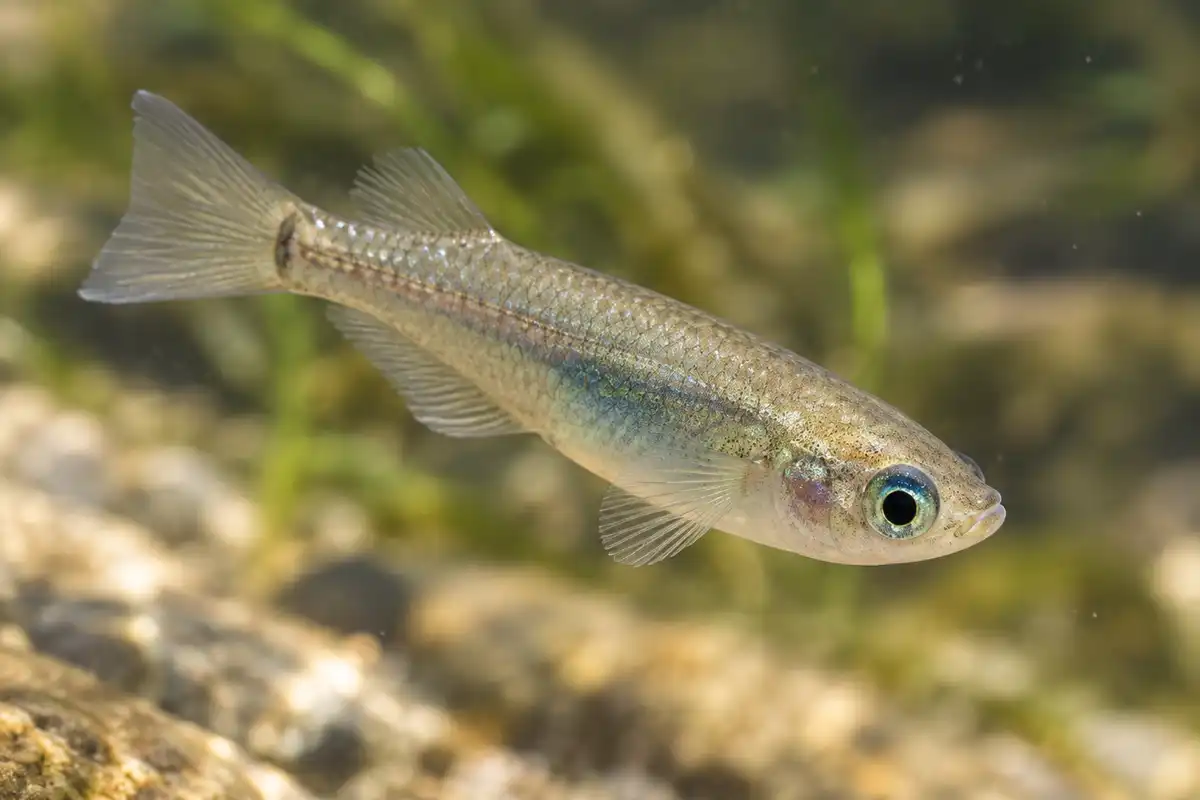
Medaka is the Japanese name and Japanese ricefish is the English one. The scientific name is Oryzias latipes. Some shops sell them as killifish, but they belong to a different group.
They come from Japan and East Asia, where they live in rice paddies, ponds and slow streams. By the early 2000s wild medaka were listed as endangered in Japan. They are also a standard lab animal in biology.
As pets they are young. A 2007 essay in the catalog says goldfish have 500 years of breeding behind them and koi 300. Ornamental medaka had about a dozen. That is why new colors keep showing up.
Medaka Tank Size
Bigger is better because more water keeps the temperature steadier and the water cleaner for longer. A big tank is harder to net and slower to clean.
Start with a 30 cm (12 in) container and 10 fish. That is the catalog’s beginner advice for any medaka fish tank.
The stocking rule is 1 L (0.26 gal) of water per fish. Pack in more and oxygen drops, growth slows and eggs drop.
| Setup | Fish | Note |
|---|---|---|
| 30 cm (12 in) container | 10 | Starter size |
| 40 L (10.6 gal) tank | Up to 40 | 1 L per fish |
| 60 cm (24 in) tank | 50 to 60 | Catalog ceiling |
| Ceramic pot or foam box, outdoors | 1 L per fish | Slow temperature swings |
Medaka Temperature: Do They Need a Heater?
Most homes do not need a heater. Medaka tolerate 0 to 38°C (32 to 100°F), so a normal room or a sheltered outdoor tub works. You only add heat to breed in winter or to keep fish active indoors, and then you set it to 20°C (68°F) or more.
| Temperature | What happens | When it matters |
|---|---|---|
| 0 to 38°C (32 to 100°F) | Fish survive | Tolerated range, not a target |
| 25 to 28°C (77 to 82°F) | Most active, best growth | Summer, and fry you want to grow fast |
| 20°C (68°F) and up | Spawning starts, with 12 to 14 hours of light | April to September |
| Around 17°C (63°F) | Disease risk peaks | April, May, September, October |
| Near 38°C (100°F) | Dangerous | Small pots in full sun |
Here is the trade-off. Warm water makes medaka busy. They eat more, spawn more and make more waste. Waste turns into ammonia, so the water goes bad faster. Cool water makes them quiet. In winter they sit on the bottom and need no food and almost no water changes.
Guides disagree because they answer three questions with one range. Surviving, growing and spawning each have their own number.
Sudden swings make fish sick, so float new fish in a bag first. In very cold regions the catalog says to bring fish indoors and heat the water.
Water Parameters
- pH: Weakly acidic to weakly alkaline. 7 is neutral. Tank water drifts acidic over time.
- Chlorine: Tap water has it and it harms medaka. Let a bucket stand for a day and night, or use a dechlorinator.
- Ammonia, nitrite, nitrate: Bacteria turn ammonia into nitrite and then nitrate. Ammonia is very harmful. Nitrate is milder but builds up. A new tank can hide ammonia in clear water.
- Water changes: Change 1/4 to 1/3 at least once a week. Cut back once the tank is stable. Skip them in winter.
- Salt: Coarse salt at 0.3 to 0.5% (3 to 5 g per L) is for sick fish only.
How to Set Up a Medaka Tank
- Pick a container. Ceramic pots and foam boxes hold temperature best outdoors. Glass is better when you want to watch from the side.
- Lay sand on the bottom. Bacteria live in it and break down waste. The catalog likes Oiso sand and baked akadama soil.
- Add plants. Water lily, water hyacinth and anacharis all work. Wash them first. Snails and pests ride in on plants.
- Fit a filter. A bottom filter with an air pump works. Bacteria also live in sponge and filter media. Our guide to the best sponge filter for a nano tank covers the options.
- Add light. Indoor fish miss sunlight and can get vitamin A and D deficiency. Run a lamp.
- Fill with aged water. Let tap water stand for a day and match the temperature.
- Add the fish. Float them in a bag and mix in tank water in small amounts. That avoids pH and temperature shock.
Don’t overpack the plants. The breeder lost a whole batch of fry in one night in his first hatching tank. Plants use oxygen in the dark.
Indoor Tank vs Outdoor Tub
The catalog recommends outdoors. Sunlight keeps fish healthier and growing faster. Indoors wins for watching them.
| Factor | Indoor tank | Outdoor tub or pond |
|---|---|---|
| Pros | See fish from the side. Breed all year with a heater and lamp | Sunlight. Live food drifts in. Fish cope with a week without feeding |
| Cons | Needs a lamp and a filter. Low light makes fish sick | Summer heat. Rain floods. Dragonfly larvae eat fry |
A medaka fish pond can be as small as a ceramic water lily pot. In summer, shade it with a reed screen. In rain, leave room below the rim so fish don’t wash out.
Overwintering is simple. Use a big pot or foam box. Add lots of sand and hiding spots like stones, tiles and driftwood. Cut food in October and November and stop in December. Restart in late March when the fish come to the surface. The catalog’s months fit Hiroshima, so shift them for your climate.
Don’t move indoor fish outside in March. The weather swings too much.
Medaka Fish Food: What Do Medaka Eat?
Medaka eat almost anything small, like plankton, daphnia, mosquito larvae and tiny insects. Outdoor tubs grow some of this on their own, but not enough.
Your staple is a prepared medaka food. Live food is better for growth. The catalog names daphnia, tubifex worms, bloodworms and brine shrimp. They cost more. Our daphnia culture guide shows how to grow your own.
Feed what they finish in 5 minutes. Leftover food rots and makes ammonia.
- Summer: 2 to 3 times a day
- Spring and autumn: once a day
- Winter: none
Fry start eating 3 to 5 days after hatching. Use powder-fine food, in small amounts 2 to 3 times a day. You can culture microworms for fry as a live option.
Going away for a week? The fish are fine. Outdoor tubs have mosquito larvae to snack on.
Medaka Tank Mates
Other medaka are the safe pick. You can mix varieties in one tank. Slow eaters like small-eye, albino and daruma types need extra food.
Avoid:
- Dragonfly larvae, which eat fry
- Adult medaka in the fry tank, because parents eat hatchlings
- Unwashed plants, which carry snails and pests
If you mix varieties and collect eggs, the dominant types take over after a few generations.
Male vs Female Medaka
Check the anal fin on the belly near the tail. Males have a bigger fin shaped like a parallelogram. Females have a smaller trapezoid fin.
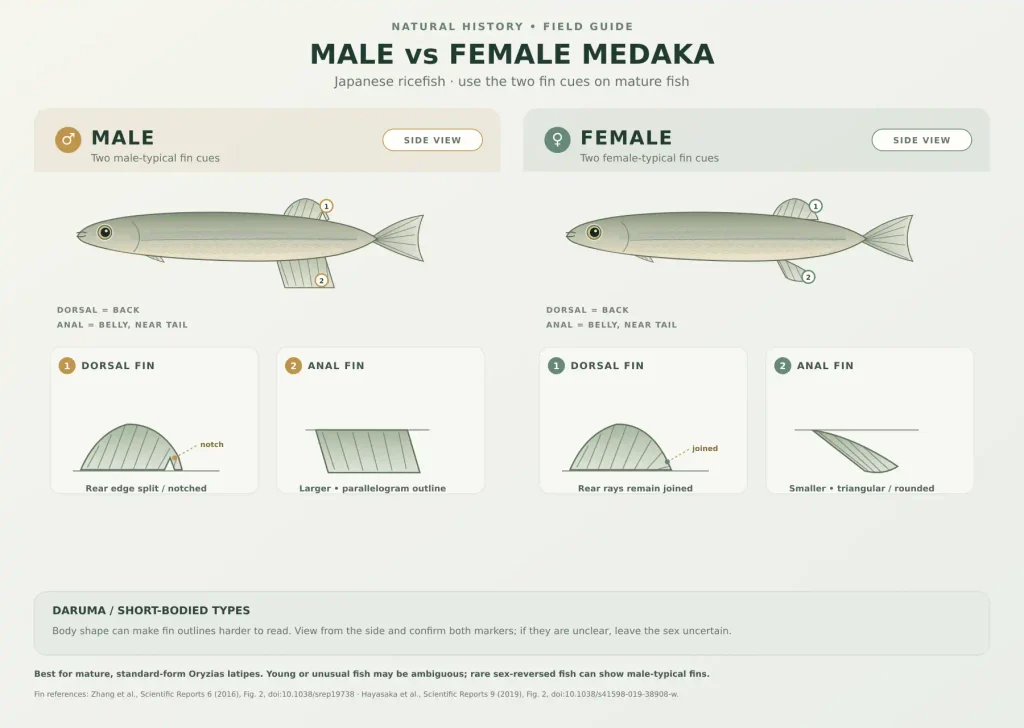
Only the male’s dorsal fin has a small notch.
Daruma types are harder at first, so use the same fin check. If the anal fin is unclear, check the back too.
Breeding Medaka: The Basics
One male and one female can pair up, but 10 fish with slightly more females works better.
Outdoors they spawn from April to September. Two things trigger it, water at 20°C (68°F) or higher and 12 to 14 hours of daylight. Underfed fish skip spawning or lay fewer eggs.
You can fake summer indoors. Set a heater to 25 to 28°C (77 to 82°F) and run a lamp 14 hours a day.
Females stick the eggs on plants. Parents eat hatchlings, so move the eggs to a separate container with the plant.
Eggs hatch in 7 to 10 days at 25°C (77°F). Colder eggs hatch slower and grow mold. Good eggs are clear and firm. Bad eggs are white and mushy. Pick them out before mold spreads.
Temperature also sets body shape. Keep half-daruma eggs at 27°C (81°F) or higher and about 90% of the fry turn out daruma. Cooler eggs give half-daruma. For daruma pairs the catalog holds fish and eggs at 28 to 32°C (82 to 90°F).
Keep fry apart from adults until they reach 1 cm (0.4 in). Sort them by size. Fast growers bully the small ones, and some breed at 2 months.
Popular Medaka Varieties
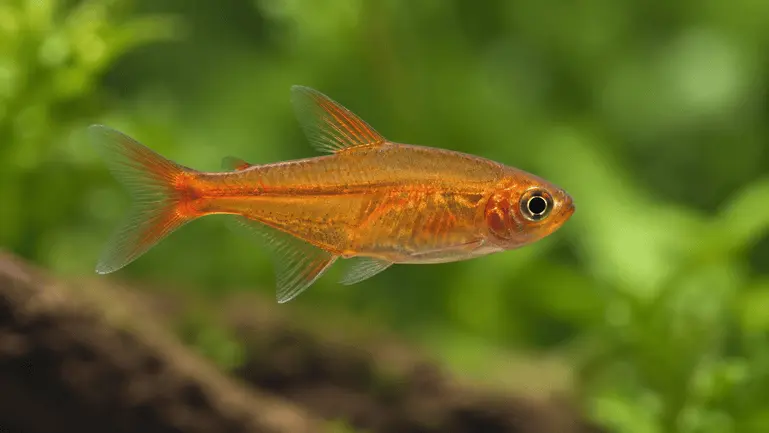
- Youkihi: Scarlet. Yellow when small and red from medium size.
- Miyuki: A platinum glow on the back. One shown in 2007 got brighter within 5 months.
- Pure black: Jet black with tiny eyes. Delicate and for experts.
- Hikari: Shiny back and a diamond tail.
- Daruma: Short and round. The catalog calls it the most popular shape.
- Samurai: Dorsal fin split in two, one half raised like a sail.
- Albino: Red eyes. Harder to raise.
Beginner pick: half-daruma or a rainbow mix. The catalog calls half-daruma hardier than daruma, and the rainbow mix easy to keep and breed.
Common Medaka Problems and Fixes
| Problem | Cause | Fix |
|---|---|---|
| Fish sit on the bottom and refuse food | Bad water or disease, if it is not winter | Change water and check the fish |
| White dots, cotton fuzz or ragged fins | Disease, mostly around 17°C | Fish medicine, or a 0.3 to 0.5% salt bath at 28°C (82°F) |
| Fry vanish overnight | Night oxygen loss, hydra, dragonfly larvae | Fewer plants, more sun |
| No eggs | Under 20°C, short days, poor food | Fix light, heat and feeding |
| Eggs don’t hatch | Infertile or moldy eggs, cold water | Remove white eggs and keep water at 20°C or above |
| Summer overheating | Small pot in full sun | Shade and move the pot |
Medaka Ricefish FAQ
Do medaka need a heater?
No. They tolerate 0 to 38°C (32 to 100°F). Use a heater only for winter breeding or in very cold regions.
How cold can medaka fish tolerate?
The catalog gives 0°C (32°F) as the low end. In winter they go dormant and need no food.
How many medaka fit in a 40 L (10.6 gal) tank?
Up to 40 by the 1 L rule. Start with 10.
Can medaka survive winter outdoors?
Yes, in a big pot or foam box with sand and hiding spots. Bring them in if winters are harsh.
How big do medaka get?
Up to 4 cm (1.6 in).
Are medaka good for beginners?
Yes. Pick half-daruma or a rainbow mix.
Start with 10 fish in a 30 cm container and keep it out of the summer sun. Once that works, pick your first color in our guide to medaka varieties.
Sources: Medaka no Yakata catalog No. 7 (Hiroshima, February 2008). FishBase, Oryzias latipes, for adult size.